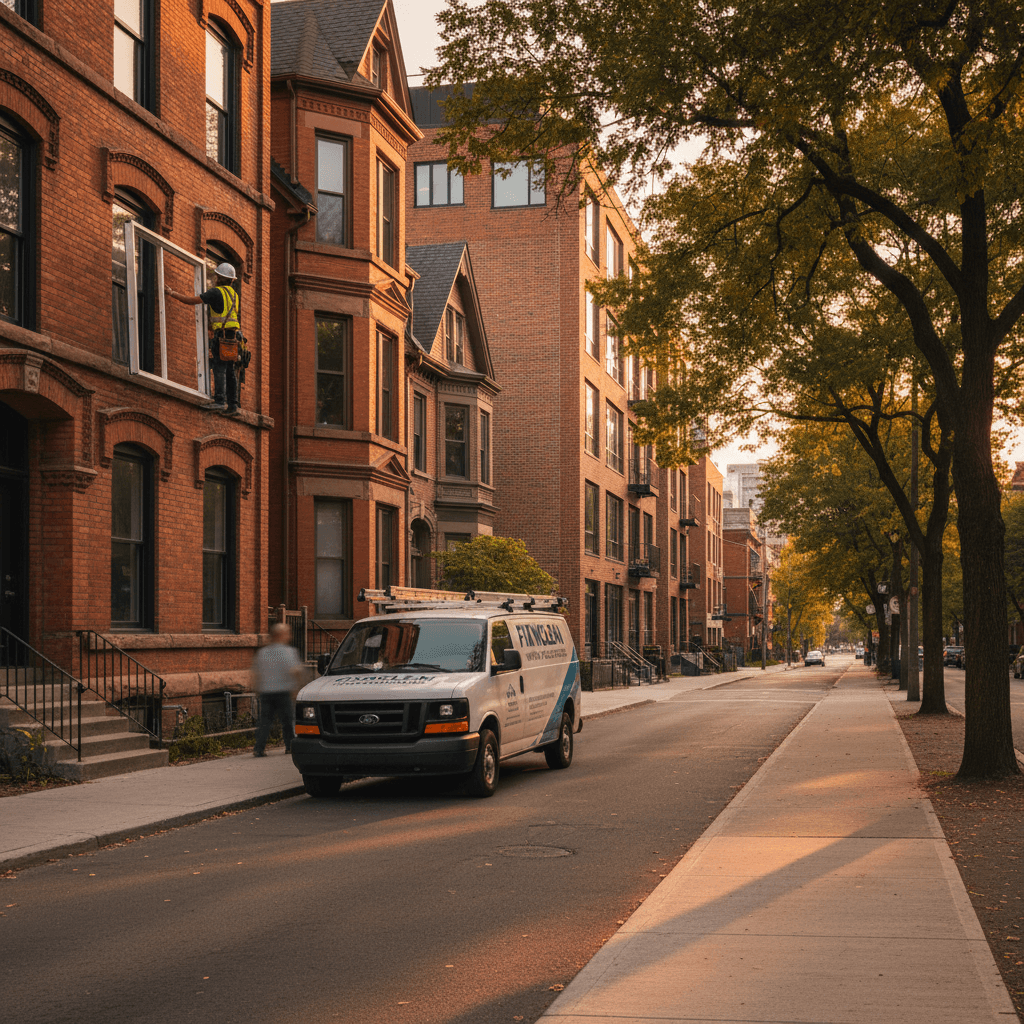

Secure the immediate area and carefully clean up any broken glass shards to ensure the safety of all occupants. You should then contact a professional service for emergency window repair Toronto to board up the damage or perform an immediate replacement. These experts provide 24/7 assistance to restore your home's security and protect it from the elements.
A broken window at 11pm during a Toronto winter storm is not just an inconvenience, it is a race against time. Every minute that passes means more cold air flooding your home, greater risk of water damage, and real safety hazards for anyone inside. Whether a rock shattered your living room glass or a failed seal left your frame compromised, knowing exactly what to do in the moments after it happens can mean the difference between a manageable repair and a costly disaster. In this guide, you will get a clear, minute-by-minute action plan covering everything from immediate safety steps and temporary weatherproofing to filing your insurance claim and reaching the right emergency window repair service in Toronto before the situation gets worse.
Why the First 60 Minutes After a Broken Window Matter Most
A broken window in Toronto is not a situation that improves with time. Within the first hour, three separate problems compound on each other, and each one escalates the longer the opening stays unaddressed.
The first is immediate physical safety. Glass fragments from a broken pane scatter farther than most people expect, particularly on the hardwood and tile floors found in Toronto condos, semi-detached homes, and older east-end houses. Bare feet on that floor are a genuine injury risk.
The second is security. An unprotected opening in a ground-floor unit in Scarborough, East York, or the downtown core is a visible point of entry. Opportunistic break-ins following storm damage or accidents are not uncommon in urban neighbourhoods.
The third is climate exposure. Toronto winters can push indoor temperatures down sharply within 20 to 30 minutes of a large break; summers bring mosquitoes and other pests through any unscreened gap. Acting fast on all three fronts is what the next 60 minutes are about.
Is a Broken Window Always an Emergency? Know the Difference
Not every broken window demands the same response. Before working through the next steps, classify what you are actually dealing with.
Scenario 1: Open hole from a shatter, storm impact, or break-in. This is always an emergency. The pane is gone or largely missing, leaving your home exposed to weather, pests, and anyone walking past. The steps in this article apply in full, and same-day action is not optional.
Scenario 2: A crack, chip, or partial break where the glass is still seated in the frame. This is urgent but not critical within the next hour. The window is still providing some barrier, but a cracked pane in a Toronto winter will allow cold air infiltration and can worsen with temperature swings. Book a repair within 24 to 48 hours rather than leaving it unattended.
Scenario 3: Foggy glass or a failed seal on a double-pane unit. The inner gas fill has escaped, but the glass itself is intact. There is no security or weather exposure risk. A scheduled appointment is entirely appropriate here.
If you are in scenario one, keep reading closely. Every minute counts.
Minutes 1 to 10: Protect People and Pets From Broken Glass

If you are in scenario one, your first move before stepping anywhere near the window is to put on hard-soled shoes. Shards from a broken pane travel farther than most people anticipate, particularly across the hardwood and tile floors typical in Toronto condos and older semi-detached homes. A fragment can sit 10 to 15 feet from the break and still cause a serious cut.
Close the door to the room immediately and keep children and pets on the other side of it until cleanup is complete. Do not let a dog or cat investigate the noise.
When you are ready to collect the glass, use thick rubber or leather gloves, not latex. Latex offers almost no puncture resistance against glass edges. Use a stiff piece of cardboard or a broom to sweep fragments into a single pile, then transfer them into a doubled paper bag or a rigid container before tying it closed. Never use a vacuum cleaner on broken glass; fine shards can damage the motor and get expelled back into the air.
This entire step takes roughly 5 to 10 minutes and requires no tools beyond what most Toronto households already have on hand.
Minutes 10 to 20: Secure the Opening and Protect Your Home
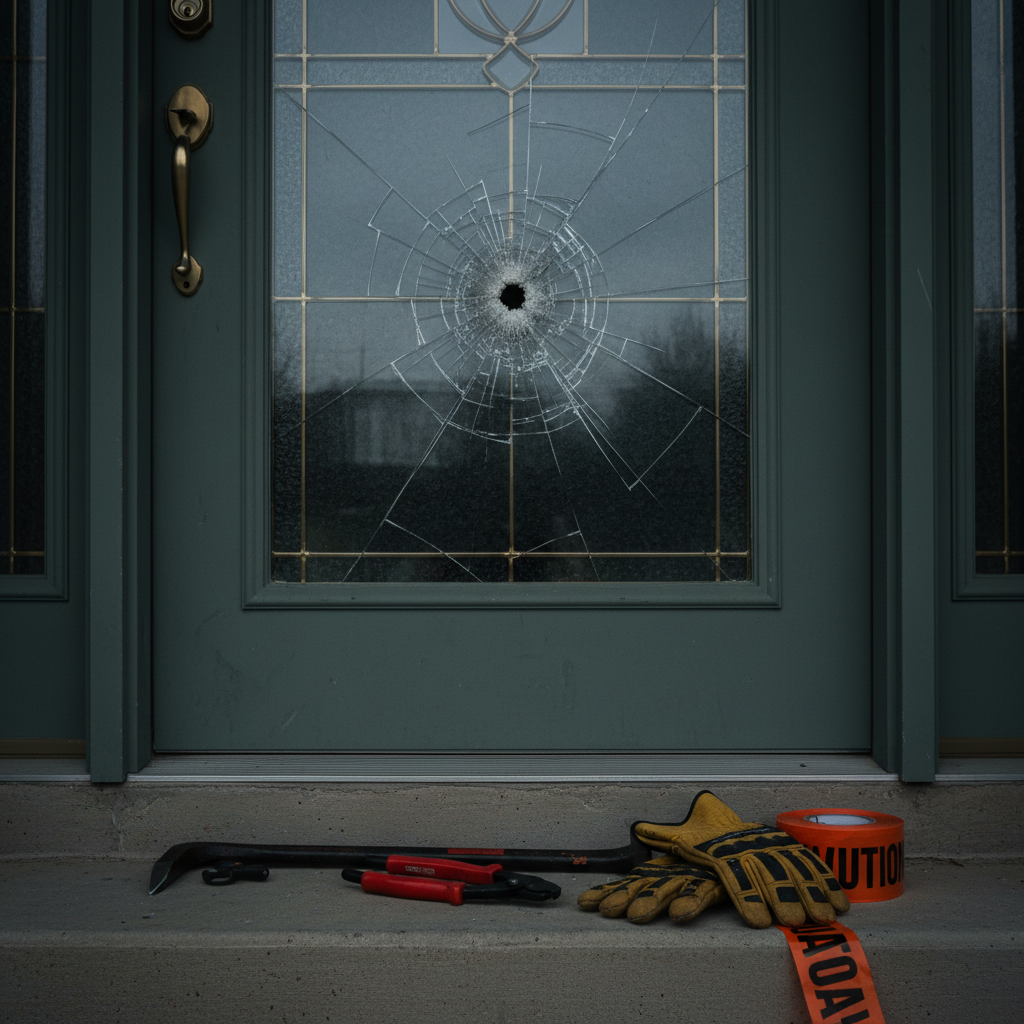
With the glass cleared, the next priority is closing the opening before weather or anyone else gets through it. Here are three approaches ranked by how well they actually hold.
1. Heavy plastic sheeting or a tarp with strong tape. This is the most effective DIY option. Cut the sheeting so it overlaps the frame by at least four inches on each side, then press Gorilla Tape or a comparable contractor-grade tape firmly against the exterior frame surface, not the glass edge or wall. Work from the top down so the sheeting hangs taut. A proper seal here matters considerably in a Toronto winter; a drafty cover over a ground-floor window can drop the temperature in an adjacent room enough to put pipes at risk.
2. Plywood or stiff cardboard cut to fit. If you have a sheet in the garage, cut it slightly oversized, press it flat against the frame, and tape or weight the edges. Plywood holds better against wind than plastic alone.
3. A layered trash bag sealed with tape. Use this only when nothing else is available. Double the bag, tape every seam, and treat it as a 30-minute stopgap rather than a real solution.
Avoid newspaper, thin plastic film, or single-layer garbage bags. They fail quickly in rain or wind and provide no meaningful insulation.
For large commercial openings or severe residential damage, professional board-up services handle what no household tape can.
Minutes 20 to 30: Document the Damage for Insurance Claims
With the opening secured, use the next few minutes to document everything before any cleanup or repair work changes what the scene looks like. This step costs you nothing but matters considerably when you file a claim.
Photograph the broken pane from the interior and exterior. Capture the full frame, close-up shots of the break pattern, and any evidence of cause: impact marks on the sill, storm debris on the floor, or signs of forced entry around the lock or frame. Before you take a single photo, check your phone's timestamp settings and make sure they are on. Note the date and approximate time in a text message or email to yourself so you have a record that cannot be edited later.
If the break resulted from a break-in, call Toronto Police Service at 416-808-2222 (non-emergency line) before contacting your insurer. Get a report number. Most insurers in Ontario will require it.
On coverage: home insurance policies in Ontario generally cover sudden and accidental glass damage, including storm impact and vandalism. They do not cover gradual deterioration, such as a seal failure that has been worsening over months. That distinction matters when you make the call.
Minutes 30 to 45: Call an Emergency Window Repair Service in Toronto
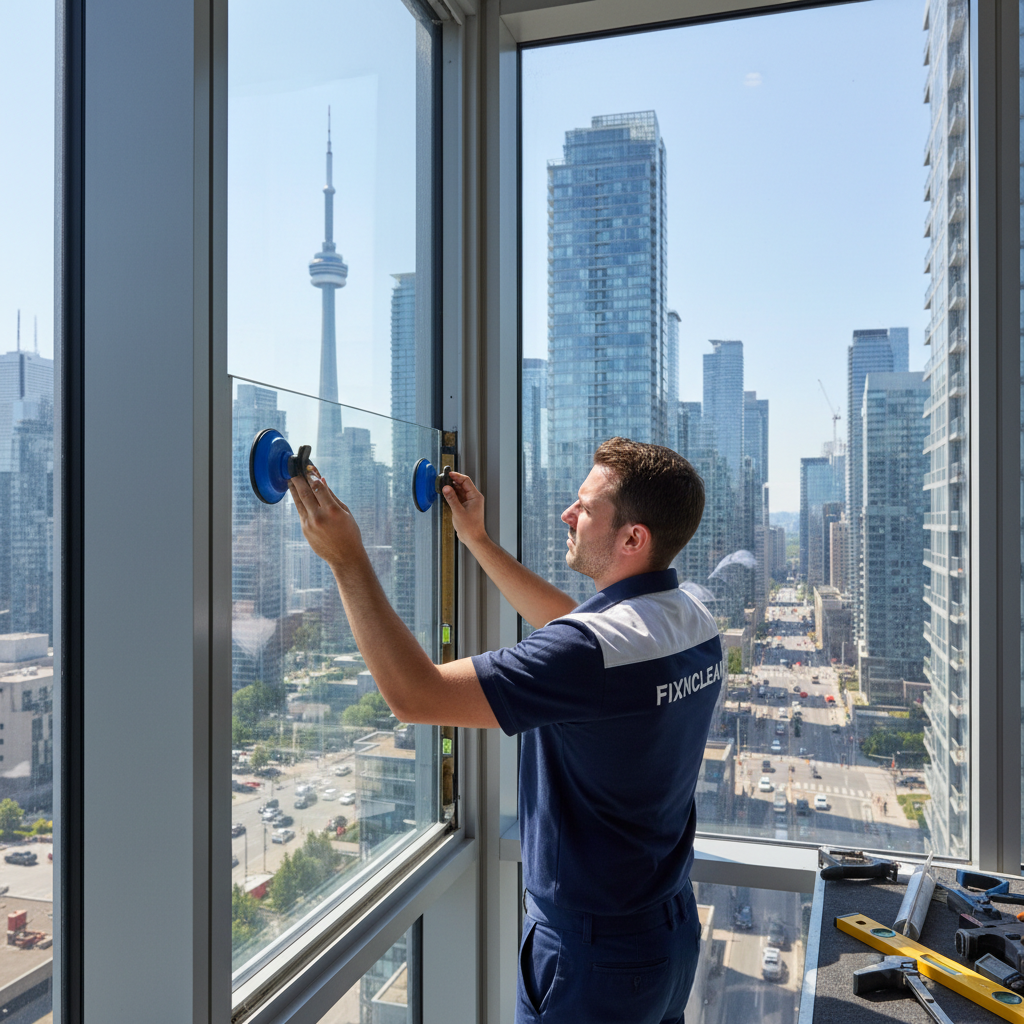
Once the opening is covered and your documentation is done, you are ready to make the call. How useful that call is depends almost entirely on the information you have ready before dialing.
Tell the technician four things upfront: your exact address and neighbourhood (Etobicoke, North York, Scarborough, Mississauga, the downtown core), the type of window involved (single pane, double pane, tempered glass, sliding, casement), the approximate size of the opening in inches if you can measure it, and whether it is a ground-floor window that represents an active security risk. That last detail affects how quickly a crew is dispatched.
Those details also let the company give you an honest answer on feasibility. A same-day repair, which means new glass installed into an intact existing frame, is often achievable for standard residential sizes. A full replacement, where the frame itself is cracked, warped, or forced out of square, typically requires a follow-up visit with custom materials. A reputable company will tell you which situation you are in over the phone rather than wait until they arrive.
Fixnclean provides 24/7 emergency window repair services across the GTA with fast response times for exactly these situations, day or night.
What to Expect When the Emergency Technician Arrives
Once the technician is on the way, knowing what actually happens at the door removes a lot of the uncertainty that makes an already stressful situation worse.
The first thing they do on arrival is assess the frame before touching any glass. If the frame is cracked, warped, or pushed out of square by an impact, installing new glass into it is not a viable fix; the opening needs a full replacement rather than a same-day repair. You will get an honest assessment and a quote before any work begins.
For standard residential windows, most technicians carry a selection of common glass sizes in their van. A straightforward single or double-pane replacement in an intact frame typically takes 30 to 90 minutes on-site. Larger commercial breaks or severe residential damage are usually boarded securely that day, with a custom-cut pane fitted the following visit.
Tempered glass is the exception worth knowing. It is standard in patio doors and most newer Toronto condos, and it must always be cut to a precise size. If the right dimensions are not in stock, a same-day finish is not possible. A reputable technician will confirm this over the phone and again on arrival rather than leave you guessing.
How to Prevent Future Window Emergencies in Toronto Homes

Once the repair is done and the dust has settled, a few low-effort habits can significantly reduce the odds of going through this again.
For ground-floor windows in dense Toronto neighbourhoods, laminated or impact-resistant glass is worth considering. Unlike standard panes that shatter on impact, laminated glass holds together when struck, reducing both the safety risk and the security gap that follows a break.
Before each winter, inspect your window frames and locks for warping, gaps, or hardware that no longer seats properly. Frames that have shifted slightly over a Toronto summer can let cold air in and make the glass more vulnerable to stress fractures when temperatures drop sharply in November and December.
Finally, trim any tree branches that overhang or sit close to your windows before spring and fall. GTA storms during those seasons are among the most common causes of sudden window damage, and a branch that looks stable in August can come down fast in a September windstorm.
If you want a professional set of eyes on your windows before the next season, check the service areas we cover in the Greater Toronto Area to confirm we work in your neighbourhood.
Dealing with a broken window is stressful, but acting quickly ensures your home remains safe and secure. By securing the area and assessing the damage immediately, you prevent further issues from developing. While temporary fixes work for a short time, a permanent solution is the best way to restore your peace of mind. If you want expert help with a professional repair, feel free to explore our specialized services to find the right fit for your home. We are here to help whenever you are ready.